
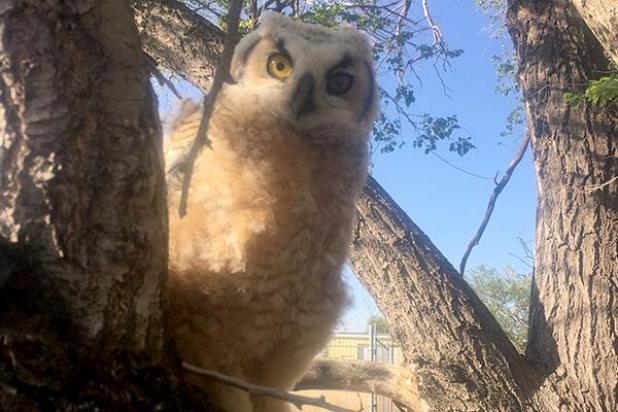
This fledgling great horned owl is one of the birds of prey that calls Phillips County home.
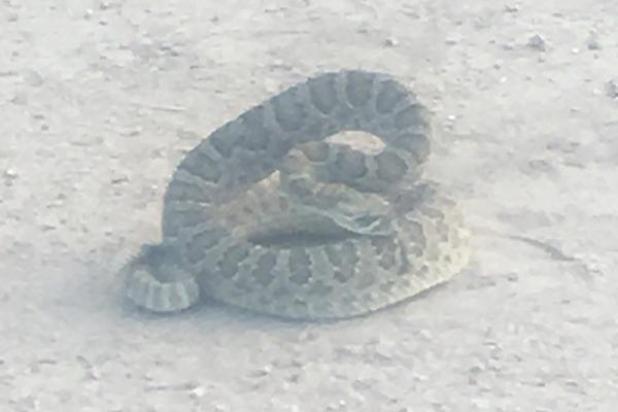
The prairie rattlesnake lives in Phillips County. This venomous snake does not always rattle as a warning, and they should be avoided if encountered in the wild.
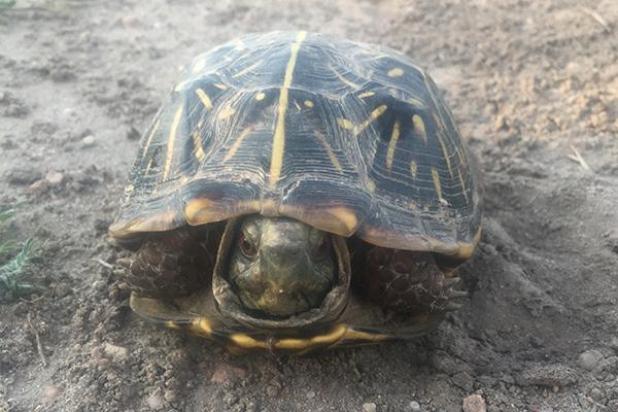
Box turtles are one of the reptile species living in Phillips County.
County’s diverse wildlife offers something for everyone
Colorado is known for its great outdoors and natural beauty, and the diversity of its wildlife is part of what attracts nature lovers to the state in the first place.
Whether you’re a hunter, photographer, birdwatcher or general nature enthusiast, Phillips County has a wide variety of wildlife available for enjoyment.
According to the Holyoke Chamber of Commerce website, Phillips County’s 688 square miles contains different types of habitats that are home to approximately 218 wildlife species.
This number includes 146 birds that either migrate to the county each year or live in it year-round, 39 mammal species, 24 reptiles and nine amphibians.
Of these species, 173 are nongame wildlife, nine of which are threatened, endangered or a species of special concern. The remaining 45 are considered game animals in Colorado.
Kyle Gordon has been district wildlife manager since 2016, and he has always loved the outdoors. Though he doesn’t necessarily have a favorite animal, he finds something to like about nearly all of them.
“They all have their little specialties,” he said.
Much of his day-to-day responsibilities include patrolling and enforcement, as well as taking calls from landowners for animal complaints and concerns. He also conducts educational programs like fishing clinics and hunter education classes.
Additionally, he completes counts of species in the summer. These consist of counting deer from the ground as well as from the air. When completing pheasant or quail counts, he stops along certain routes and counts the different calls he hears.
Gordon said people can see many different types of wildlife simply by driving county roads. They can also visit Holyoke State Wildlife Area at county roads 14 and 31 and Frenchman Creek State Wildlife Area south of Highway 6 between county roads 29 and 27. He added that the Lions Club Fishin’ Hole and Haxtun Fishing Pond are also good places to view wildlife.
The county may be best known for its birds — ring-necked pheasants even adorn the City of Pride and Progress signs that welcome visitors to Holyoke.
Other county gamebirds include bobwhite quail, greater prairie chickens, mourning doves, Eurasian collared doves and the Rio Grande wild turkey.
Although there’s no naturally occurring continuous running water in the county, rain can turn fields that are usually dry into shallow lakes, called playas, that attract wildlife — especially migrating waterfowl like geese and ducks. The county’s amphibians, including bullfrogs and tiger salamanders, can also sometimes be spotted at playas.
Gordon said the red-tailed hawk is the most common bird of prey in the county, but the ferruginous hawk and prairie falcon are residents as well. He added that golden eagles also come through Phillips County.
Peregrine falcons and burrowing owls can both also be seen in the county, and they are both on the state concern list. The burrowing owl relies on the burrows of other animals for shelter, often living in prairie dog towns. The owls’ habitat has been threatened, reducing overall numbers in the area.
In terms of mammals, Phillips County is home to deer, coyotes, pronghorns, raccoons, skunks, elk and more.
Gordon said the county has a resident elk population living in small herds in the sandhills.
He noted that mule deer make up the majority of the deer population. Mule deer are typically larger than white-tailed deer, and mule deer have branched or forked antlers while white-tailed deer antlers have tines coming off one main beam. The tail of a white-tailed deer is white on its underside and sticks up like a white flag when they run.
Gordon pointed out that mountain lions are seen every now and then in Phillips County. They follow the South Platte River and sometimes the Frenchman Creek. They occasionally venture south of the South Platte River into Phillips County in search of food.
He added that seeing mountain lions in the county is rare, and like most wildcats, they are secluded and it’s difficult to tell when they’re in the area.
Red and gray foxes both have healthy populations in the county. The swift fox, which is much smaller than red and gray foxes, is on the state concern list. Its population is comparatively low and less widespread since it only lives in the eastern part of the state.
Phillips County makes a good home for reptiles, including lizards, snapping and box turtles, and snakes. The prairie rattlesnake, bull snake, hognose snake and garter snake are all common in the county.
Gordon said the venomous prairie rattlesnakes often use other animals’ burrows for shelter. Since they’re cold-blooded, snakes can be found on rocks or roads during the day, where they sun themselves for warmth.
He said snakes usually try to avoid human contact but can get aggressive if cornered.
“Leave it alone,” he cautioned anyone who sees a rattlesnake in the wild. “Slowly retreat. They don’t always rattle.”
He said similar advice applies to avoid getting sprayed by a skunk. Noting that they’ll usually try to avoid people, he said they can spray if they feel cornered or threatened.
Another important tip Gordon offered is to avoid touching the young of any animal. He said fawns can sometimes be found alone in the wild, but it’s important to leave them alone since their mother will likely return to it.
Gordon noted that anyone with wild animal concerns should contact the wildlife office at 970-842-6300 or Phillips County Comm Center at 970-854-2735.