
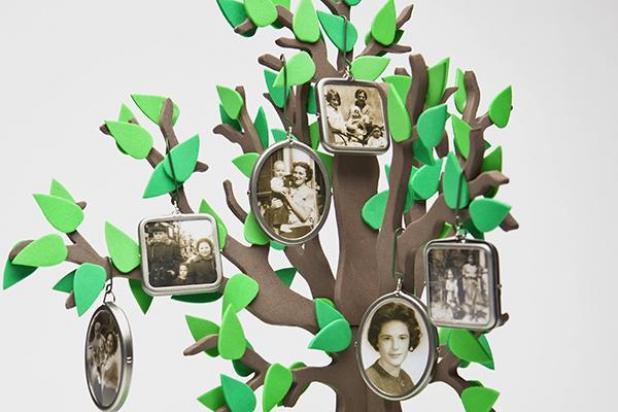
October is Family History Month, and it may be just the right time to start researching your family tree.
Know your roots in Family History Month
October is Family History Month, and there are many resources for those interested in tracing their roots as they pursue knowledge about who they are and where they come from.
Genealogy can be a journey of self-discovery that can be shared with other family members, and it can be a great way to get children interested in knowing the history of their family.
The Library of Congress recommends methods of sharing this search with children and making it interesting to them.
Known as the K-W-L approach or technique, it can be a teaching strategy applied to several areas. Regarding genealogy, this means asking children to write down or draw things they know about their family, past or present. This is the “K” step.
Next, in step “W,” they should write or draw what they wonder about or what they want to know about their family.
Parents can help their kids with the quest to find the answers to what they’re wondering about regarding their family or its history. One of the recommended methods of doing so is to have the children interview older family members to try to get direct answers to their questions.
Finally, the “L” step is the portion where they write down or draw what they learned about their family. Documentation is key in this part since it allows them to record and share what they’ve learned in order to chart their progress.
Starting the search to uncover family history can be overwhelming, so it’s recommended to keep a running list of records and their locations.
Many people likely have boxes full of old family photos stashed away somewhere. According to familytreemagazine.com, categorizing these heirlooms is an important step in getting them organized.
It’s also beneficial to identify as many people in the photos as possible, as well as the location and date they were taken. Identifying these elements, or at least getting as close to doing so as possible, can help point researchers to other clues or other avenues of inquiry.
Interviewing relatives at family reunions can be a good way to get information from members of the family that you don’t often see. The interviews don’t have to be formal occasions, but as always, it is important to document any information learned.
Another potentially useful tool to organize information is a family history calendar that includes dates of family births, deaths, marriages and other significant events.
The National Genealogical Society’s website offers free pedigree charts, family group sheets and family relationship charts to help researchers organize their work.
The full article is available in our e-Edition. Click here to subscribe.