
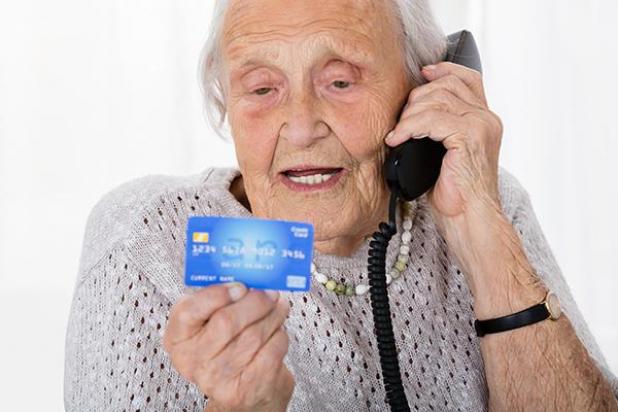
Your golden years should not be marred by swindlers
Your golden years are now within your sights, and you may have spent years investing in the time of your life when retirement will afford you the freedom to experience life in a much different mode.
Even if you haven’t built up a nice little nest egg, what you do have is essential for day-to-day living.
There are unscrupulous characters lurking everywhere just waiting to bait their next victim in a pool of millions.
These scam artists particularly like to target senior citizens.
Scam artist’s handbook
The FBI’s Common Fraud Schemes web page states that senior citizens especially should be aware of fraud schemes for the following reasons:
1. Senior citizens are most likely to have a “nest egg,” own their home and/or have excellent credit — all of which make them attractive to con artists.
2. People who grew up in the 1930s, 1940s and 1950s were generally raised to be polite and trusting. Con artists exploit these traits, knowing that it is difficult or impossible for these individuals to say “no” or just hang up the telephone.
3. Older Americans are less likely to report a fraud because they don’t know who to report it to, are too ashamed at having been scammed or don’t know they have been scammed. Elderly victims may not report crimes, for example, because they are concerned that relatives may think they no longer have the mental capacity to take care of their own financial affairs.
4. When an elderly victim does report the crime, they often make poor witnesses. Con artists know the effects of age on memory, and they are counting on elderly victims not being able to supply enough detailed information to investigators. In addition, the victims’ realization that they have been swindled may take weeks — or more likely, months — after contact with the fraudster. This extended time frame makes it even more difficult to remember details from the events.
5. Senior citizens are more interested in and susceptible to products promising increased cognitive function, virility, physical conditioning, anti-cancer properties and so on.
In a country where new cures and vaccinations for old diseases have given every American hope for a long and fruitful life, it is not so unbelievable that the con artists’ products can do what they claim.
Anyone, anywhere can be a victim of a scam artist who stalks their prey from about any location.
Common frauds
It is important to say, “There’s no shame in being a victim of a scam artist. Anyone can find themselves within their cross hairs, but seniors are being deliberately targeted,” said Ryan Sothan, Nebraska’s Attorney General’s outreach coordinator from Lincoln.
Sothan gave a program in Imperial, Nebraska, earlier this year.
The Attorney General’s office receives complaints from scam victims and attempted scams daily, Sothan said.
“Of all the complaints our office receives, 37% are for people 60 years old and older, and that age group is severely under-reported,” he added.
There are many common frauds and scams in Nebraska, and most are by phone, said Sothan.
A few popular imposter scams making the rounds lately are:
IRS Scam — “This is your final notice. If you do not pay today, you will be arrested.”
Tech Support Scam — “We’ve detected a virus or other malware on your computer...”
Family Emergency (Grandparent Scam) — “Grandma? Grandpa? It’s me, your oldest grandchild. I’m in trouble and need your help. Please don’t tell Mom!”
Irregular or Fraudulent Activity Detected or Your Account Requires a Security Update — “Your account is subject to a compulsory security update. You must login to enable.”
Credit Card Rate Reduction Scam — “Congratulations! Due to your outstanding payment history you now qualify for reduced interest rates on all of your credit cards.”
Auto Warranty Expiration/Renewal
Just to name a few....
“The most popular scam 15 months running is the Social Security scam,” Sothan said.
It’s the most common form of government imposter scam in which scammers pose as government officials to get you to send money or give up personal and financial data for use in identity theft, he explained.
One common tactic involves fake Social Security Administration employees calling people with warnings that their SS numbers have been linked to criminal activity and suspended.
“The scammers ask you to confirm your number so they can reactivate it or issue you a new one — for a fee,” said Sothan.
This is no emergency but a ploy to get money and personal data.
“Social Security does not block or suspend numbers — ever,” he said.
This con is sometimes executed by “robocall.” A recording provides a number for you to call to remedy the problem.
In another version, the caller says your bank account is at risk due to illicit activity and offers to help you keep it safe, Sothan said.
Savvy seniors
Even though the FBI’s webpage lays out the dangers scam artists pose to senior citizens in general, many seniors are becoming more knowledgeable about scam artists in today’s world.
The Chase County Sheriff’s Office in Imperial received 21 scam reports over the last year, said Sheriff Kevin Mueller, and most were targeted toward senior citizens.
“Luckily, no one last year that reported scams to us lost any money because people are getting better about asking questions before sending money, and they are more aware of the scams,” he said.
A good example of a “Family Emergency” scam was a phone call received by Elna Johnson of Imperial around eight months ago.
“I got a call from a young man who said he was my grandson, Duncan. He called me grandma, and he sounded a lot like Duncan,” Johnson said.
She said he told her he was in jail in Florida after being in the wrong place at the wrong time and was falsely accused in connection with some drugs found in a taxi he was riding in.
He said he needed $5,000 for bail, and then asked her not to tell “mom and dad.”
Johnson was suspicious because of the instructions he gave to send the money, and also the fact he called on her landline.
“Duncan always calls me on my cellphone,”she said.
She kept asking questions, which he avoided answering. She then told him it sounded like a scam and refused to pay. The caller hung up.
Following the call, she immediately sent a text to Duncan to find out if he was OK.
He responded back that he was fine and very proud of her for being suspicious and not sending the money, said Johnson.
She knew to ask the right questions and didn’t become a victim.
Read the full article and the entire Have the Time of Your Life special section online for FREE.