
Local
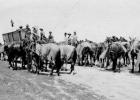
A wheat header barge and crew are pictured in 1918 on Ed Gansemer’s farm 3 miles south and 1 mile west of Paoli. Headers were pushed by six horses and would remove the heads and elevate them into the header barge. Header barges were pulled by two horses and had two operators — one to drive the horses and one to move the wheat in the barge. When it was full, they would pitch it off onto a stack where another crew member was positioned to stack it. Wheat would stay in the stack until it had gone through a “sweat” of six to eight weeks. Then it was put through a threshing machine pulled by a steam engine. — Source: Phillips County Museum
Peekin' into the Past
Five Years Ago
Aug. 25, 2016
Holyoke City Council approved the purchase of a new Taser body camera system for Holyoke Police Department at the Aug. 16 meeting.
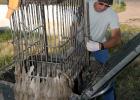
Lennie Fisbeck raises the wastewater screening basket at the wastewater treatment plant Monday morning, Aug. 16. Flushable wet wipes can be seen in the basket, which city workers dispose of when they clean the basket. Most plugs and clogs in Holyoke are due to the flushing of flushable wet wipes, which are not biodegradable. — The Holyoke Enterprise | Johnson Publications
Residents can help wastewater treatment process run more smoothly
Everyone wants to see their city be successful, and it often takes everyone doing their part to achieve that goal.
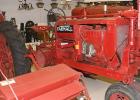
This 1936 Farmall F-12 tractor at the Phillips County Museum could certainly get things done. In addition to completing farm work, it also got second place in its class in a 1986 tractor pull. — The Holyoke Enterprise | Johnson Publications
Farmall tractor shares Weis family’s fond memories at county museum
Phillips County Museum is home to a 1936 Farmall F-12 tractor that holds special memories for the Weis family.
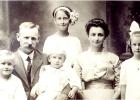
The Renck family is pictured in about 1914 from left, front row, Charles, Robert and Anna; and back row, Paul, Clara and Elisabeth “Elise.” The oldest child of the family, Walter, died while the family was visiting Elise’s parents in San Francisco and the 1906 earthquake struck. — Source: Phillips County Museum
Peekin’ into the past
Five Years Ago — Aug. 18, 2016
Aug. 15 was the first day on the job for Elizabeth Hutches, new director for the Holyoke Chamber of Commerce.